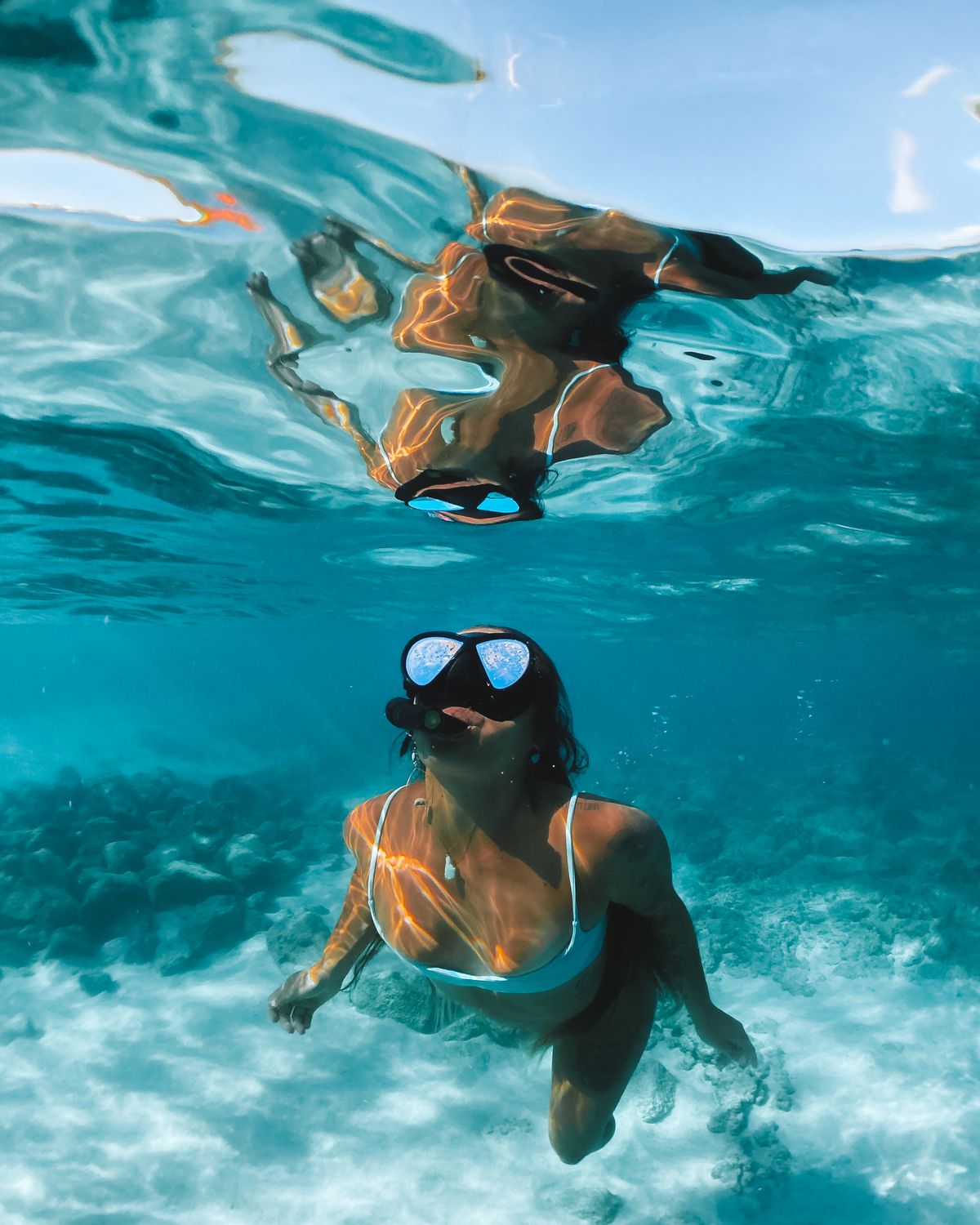
The connection between Blue Flag certification and snorkeling quality is direct and logical: Blue Flag requires Excellent bathing water, which means low turbidity, low bacterial load, and independently verified results. Clean water is the first prerequisite for good snorkeling visibility. It doesn't guarantee a vibrant reef ecosystem, but it rules out the murky, polluted conditions that make snorkeling pointless.
Our dataset identifies 34 Blue Flag beaches specifically tagged as snorkel sites — beaches where the combination of water clarity, accessible reef or rocky substrate, and marine life make snorkeling genuinely worthwhile. This guide covers the best of them by country.
Greece: The Mediterranean's Clearest Snorkeling Waters
Greece consistently produces the highest water clarity scores of any Blue Flag country in the Mediterranean. The combination of low rainfall (minimising run-off turbidity), limited industrial coastal development, and the natural flushing action of the Aegean and Ionian currents creates conditions where 20–30 metre visibility is routine at certified beaches.
Vai Beach on Crete's east coast is unique in Europe — it sits at the edge of Europe's largest natural palm forest, and the clear turquoise water over the rocky seabed makes it one of the most photogenic snorkel sites on the island. The beach holds Blue Flag certification and the snorkeling around the rocky flanks of the beach reveals octopus, sea urchin, and parrotfish in the shallow zones.
Matala on Crete's south coast was made famous in the 1970s as a hippie retreat; today it's a well-managed Blue Flag beach with excellent snorkeling around the distinctive cave-pocked sandstone cliffs at each end of the bay. The water clarity in summer is exceptional — regularly 20+ metres. Red Beach, accessible by boat from Matala, offers even richer marine life but is outside the Blue Flag zone.
Ag. Onoufrios in Crete represents the quieter, less-visited end of Greek certified snorkel beaches — a small rocky-flanked cove with Excellent water quality and consistent visibility. The relative obscurity keeps fish stocks healthier than at more visited sites.
The most popular certified beaches in Greece (Santorini-adjacent, Mykonos) have excellent water clarity but depleted marine life from the sheer volume of snorkelers. Less visited Blue Flag beaches — particularly those in northern Greece and the less touristed Cyclades — tend to have more interesting underwater life precisely because human pressure is lower. Water quality certification does not protect marine ecosystems from visitor impact, only from pollution.
Croatia: Adriatic Visibility and Rocky Coves
The Adriatic is recognised as one of the clearest seas in the Mediterranean, and Croatian Blue Flag beaches benefit from this. The water's low turbidity — a result of the Adriatic's relatively enclosed nature and limited river input — produces visibility that regularly exceeds 20 metres at certified sites.
Vestar Beach near Rovinj in Istria has become one of Croatia's most respected snorkel sites. The rocky headlands framing the cove create ideal habitat — crevices for moray eel, posidonia seagrass meadows in the shallows, and the occasional octopus on the rocky bottom. Blue Flag certification has been held consistently, and the small scale of the beach limits bather density.
AC Polari near Rovinj is a larger certified beach with designated snorkeling zones separate from the main bathing area — a thoughtful management approach that protects both bathers and marine life. The rocky margins of this beach are home to sea bass, bream, and various Adriatic reef fish.
Crnika Beach on the Istrian coast is a quieter option with Blue Flag status and excellent underwater terrain. The combination of pebble beach, rocky underwater substrate, and Excellent water quality classification makes it one of the better choices for serious snorkelers who want quality over convenience.
Spain: Costa Brava and Mediterranean Islands
Spain's Mediterranean coast has pockets of excellent snorkeling at Blue Flag certified beaches, though the country's massive tourist volume means the best sites require some strategic planning.
La Granadella near Xàbia (Jávea) on the Costa Blanca is widely considered Spain's finest snorkeling beach — a small protected cove with crystalline water, a marine reserve nearby, and Blue Flag certification. The underwater terrain includes rocky reefs, seagrass beds, and caves accessible to confident snorkelers. Arrive before 9am or after 5pm to avoid the crowds that descend in peak summer.
Sa Conca on the Costa Brava near Palamós is a smaller certified cove with excellent water clarity. The rocky headlands hold sea urchin, rainbow wrasse, and octopus — typical of the Costa Brava's richer marine environment compared to the sandier southern beaches.
Sant Elm in Mallorca offers snorkeling in the marine reserve around the Dragonera island, visible from the beach. The beach itself is Blue Flag certified with clear water, and boat trips to the reserve provide access to richer marine life than the beach snorkeling alone.
Italy: Sardinia and the Sicilian Coast
Porto Frailis near Arbatax in Sardinia is a spectacular snorkel site — deep-red porphyry rock formations create underwater terrain unlike anything else in the Mediterranean. The Blue Flag certification here covers water that regularly registers Excellent quality and the underwater visibility routinely exceeds 25 metres in calm conditions.
Marina di Modica in Sicily's southeast is a long sandy beach with Blue Flag status and excellent snorkeling off the rocky points at both ends. The clear Ionian water — cleaner and less developed than much of the Tyrrhenian coast — provides good visibility and reasonable marine diversity.
When to Go for the Best Snorkeling at Blue Flag Beaches
June is the optimal month for Mediterranean snorkeling at Blue Flag beaches. The winter storms have cleared, water temperatures are rising (20–23°C), tourist pressure is lower than July–August, and summer algal blooms have not yet begun. Water clarity is typically at its annual peak. August, despite being peak tourist season, often has reduced visibility at busy beaches due to bather disturbance of fine sediment and elevated sunscreen contamination.
For the full picture on Mediterranean water quality and what the certification means in practice, the bathing water quality guide explains the testing methodology. The Greece Blue Flag guide and Croatia guide cover broader beach planning beyond snorkeling.
Does Blue Flag certification mean good snorkeling visibility? +
Blue Flag certification requires Excellent or Good bathing water quality, which addresses biological pollution (E. coli, intestinal enterococci) rather than physical clarity. However, in practice, the factors that cause poor bathing water quality — sewage discharge, agricultural run-off, industrial pollution — are the same factors that cause poor water visibility. An Excellent Blue Flag classification is a strong indicator of good snorkeling conditions, but not a guarantee. Physical factors like wind-stirred sediment, plankton blooms, and natural turbidity can reduce visibility independently of water quality certification. For the best conditions, check recent local reports alongside the certification status.
Which Mediterranean country has the best snorkeling at Blue Flag beaches? +
Croatia and Greece are consistently the strongest options. Croatian Adriatic water has among the lowest turbidity in the Mediterranean due to the sea's semi-enclosed nature and geology. Greek waters, particularly in the Aegean, benefit from strong natural flushing and low rainfall. Both countries have Blue Flag beaches with rocky margins that support diverse marine life. Spain's Costa Brava (La Granadella) and Sardinia (Porto Frailis) offer exceptional sites, but the overall consistency across certified sites is highest in Croatia and Greece.
Is La Granadella beach crowded for snorkeling? +
Yes — La Granadella is one of the most popular snorkel beaches on Spain's Mediterranean coast and gets extremely crowded in July and August, particularly at midday. Arriving before 9am or after 5pm significantly improves the experience. The beach has limited parking and the road is narrow — congestion begins early on peak days. For the best underwater conditions, visiting in June or September avoids both the crowds and the slight visibility reduction that high bather density causes in peak summer.
What marine life can you see snorkeling at Mediterranean Blue Flag beaches? +
At rocky-margin Blue Flag beaches in the Mediterranean, common snorkeling encounters include octopus (in crevices on the bottom), sea urchins (on all rocky substrates), moray eel (hidden in rock gaps), various wrasse species (rainbow, ornate, cuckoo), bream and sea bass (in the water column), and starfish on the seabed. At beaches adjacent to posidonia seagrass meadows — particularly in Croatia and Greece — seahorses are occasionally sighted. Sharks are present in the Mediterranean but extremely rarely encountered by snorkelers in shallow coastal waters.
What equipment do I need for snorkeling at a Blue Flag beach? +
A basic mask, snorkel, and fins are all you need for the beaches in this guide — none require specialist equipment. For rocky-bottom beaches like La Granadella, Vestar, and Porto Frailis, water shoes or reef boots are strongly recommended for entering and exiting over sharp rock and sea urchins. A rash vest or thin wetsuit top provides protection from jellyfish (present in Mediterranean waters from June onwards) and prevents sunburn on your back during longer snorkeling sessions. Waterproof reef-safe sunscreen is important for protecting both your skin and the marine ecosystem you're there to enjoy.