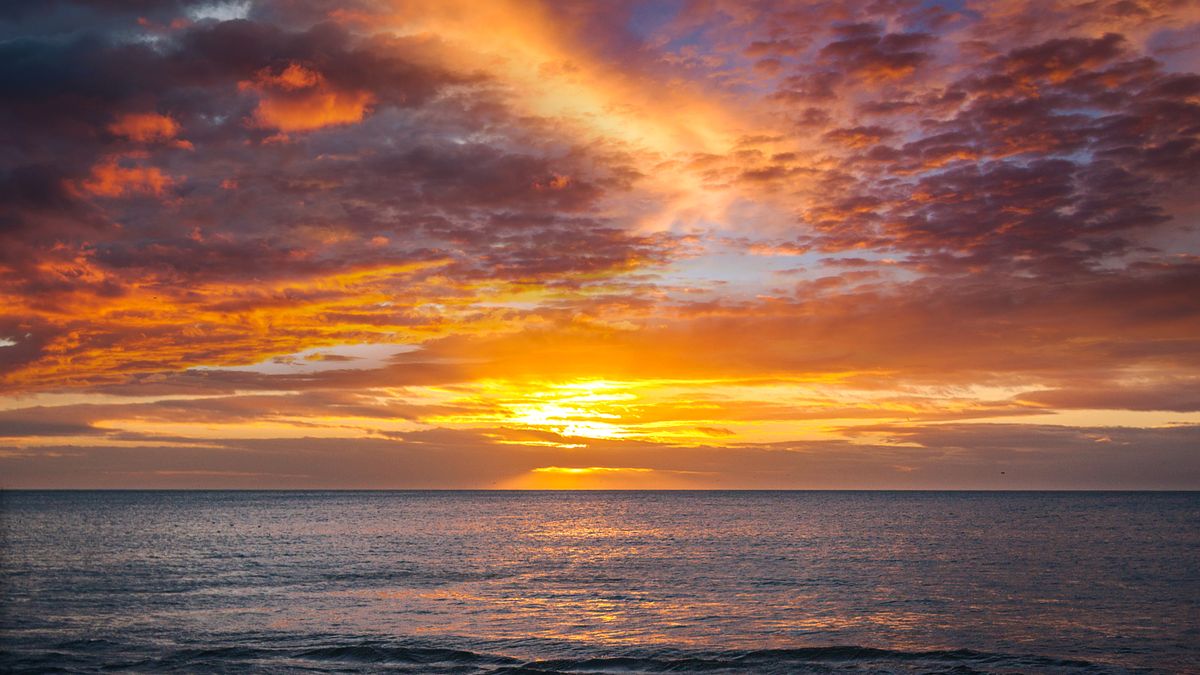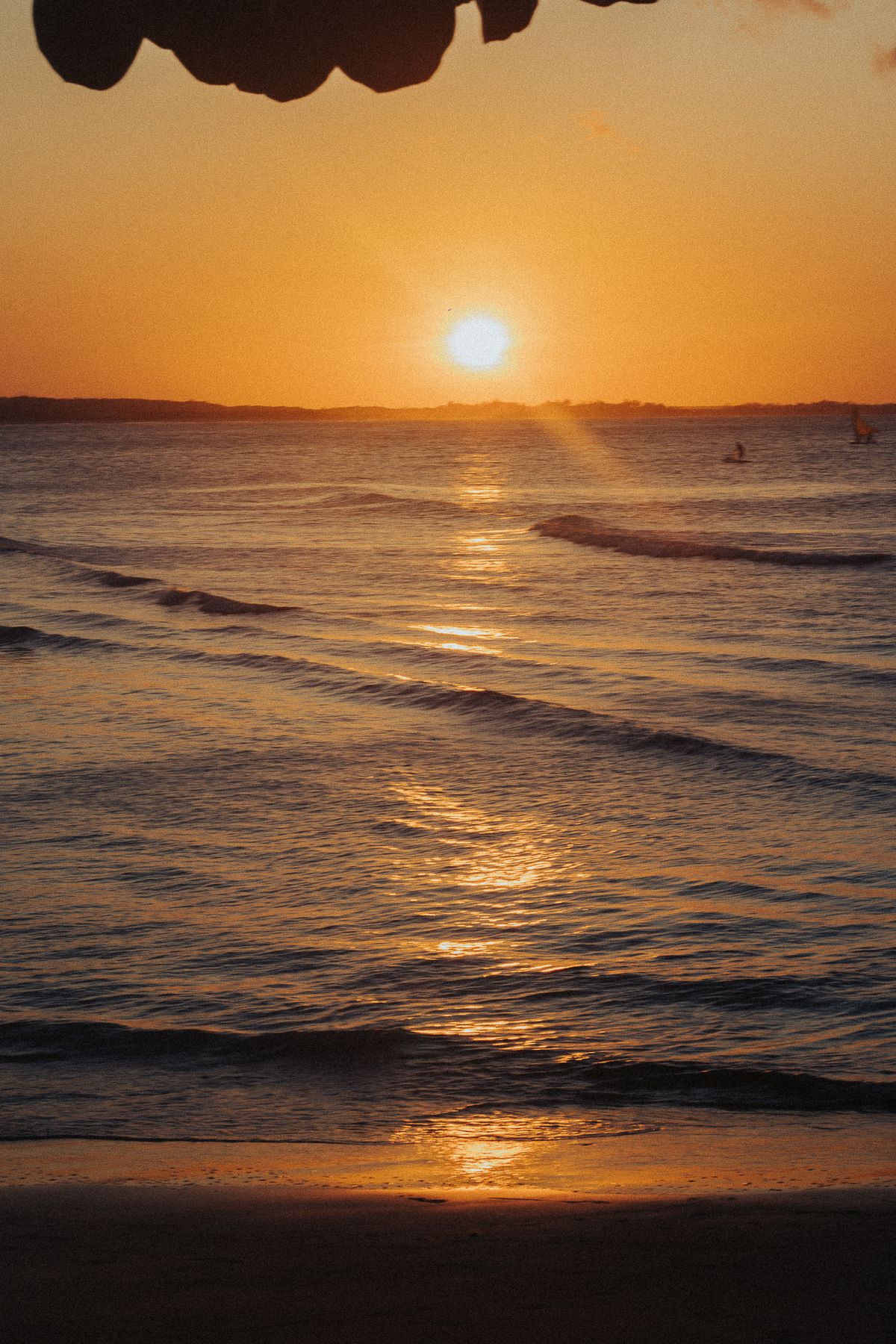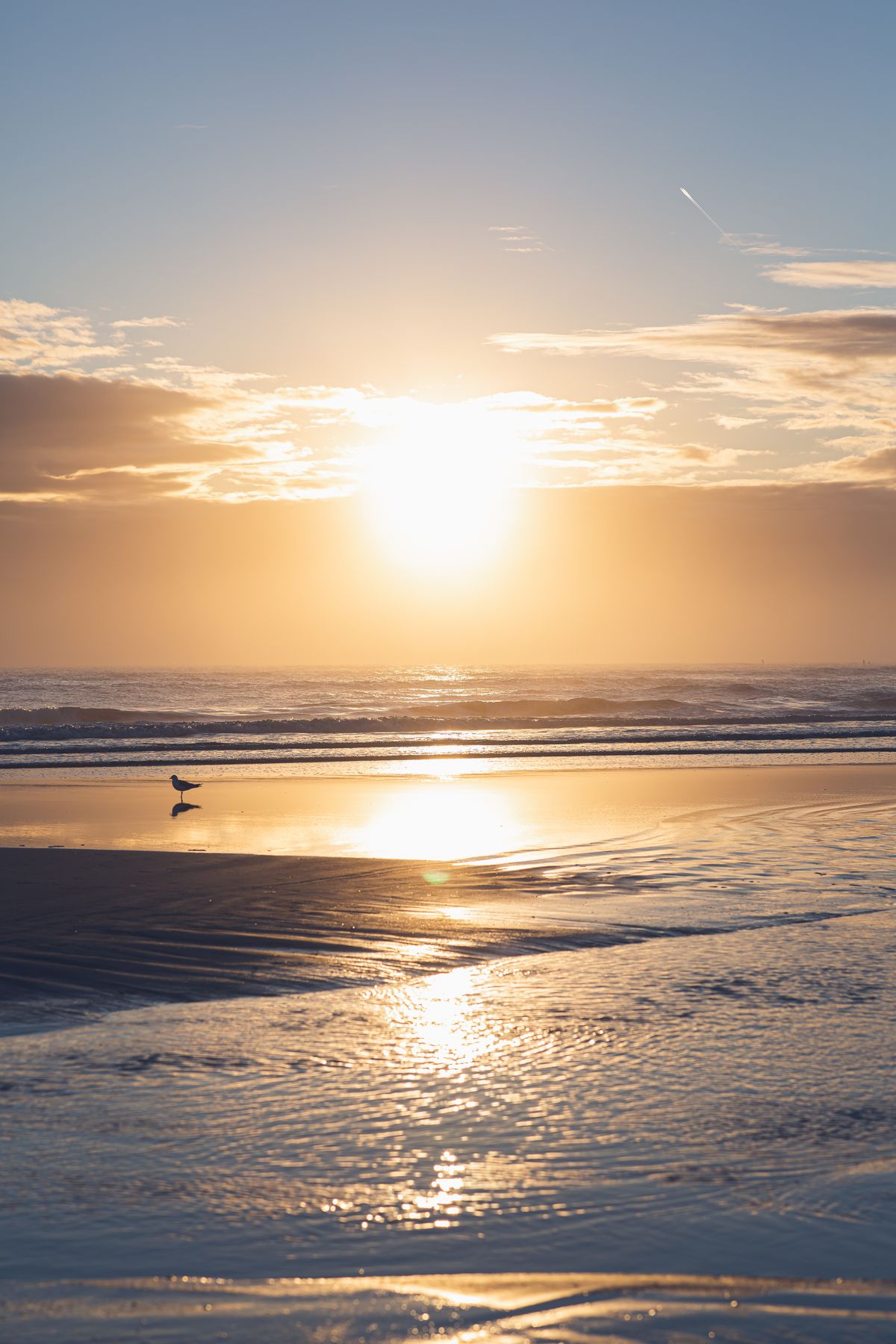
Sunrise beaches are east or northeast-facing beaches that catch early light before the crowds arrive. At a certified beach, that early hour also means tested water, working facilities, and a management structure that has met its obligations for the season. Dawn on a Blue Flag beach is rarely crowded — most visitors arrive after 10am.
What Makes a Sunrise Beach
An east-facing beach sees the sun rise over the sea rather than over land. The sun clears the horizon directly in front of the beach, creating the reflection-on-water effect that defines sunrise beach photography. Northeast-facing beaches catch the early light at a slight angle, with longer golden-hour windows. Southeast-facing beaches catch later morning light once the sun has climbed.
The practical advantage beyond photography is cooler morning temperatures. East-facing beaches are shaded by afternoon on hot days — better for young children, older visitors, and anyone who doesn't enjoy intense afternoon sun. On Mediterranean beaches in July and August, arriving at dawn and leaving by noon is often the most comfortable approach.
Best Sunrise-Facing Blue Flag Beaches
Greece — Aegean Facing
Most of mainland Greece's eastern coast and the eastern-facing shores of the Aegean islands look east toward Turkey across the Aegean Sea. These beaches catch the first Aegean light. Lefkada's eastern beaches face the Ionian Sea at a northeast angle. Eastern Crete, eastern Lesvos, and the eastern shores of Rhodes all offer east-facing certified beaches with open Aegean horizon views.
Italy — Adriatic Coast
Italy's Adriatic coast — Emilia-Romagna, Marche, Abruzzo, Puglia — faces east across the Adriatic toward Croatia and Albania. These beaches see sunrises directly over the sea. The certified beaches of the Adriatic coast are among the best-managed in Italy, with strong Blue Flag programmes in Emilia-Romagna and Marche in particular. The beaches are generally wide and flat-sand, ideal for dawn walking.
Croatia — Adriatic West Coast
The western coast of Croatia's Istrian peninsula faces west across the Adriatic, but the eastern-facing beaches on Croatian islands face toward the mainland and catch morning light over the Adriatic. Zlatni Rat at Bol faces south, catching good morning and evening light depending on the season and wind direction.
South Africa — East Coast
South Africa's east coast — KwaZulu-Natal, Eastern Cape — faces the Indian Ocean directly. These beaches see dramatic sunrises over open ocean with no land to the east for thousands of kilometres. Camps Bay near Cape Town faces west, but the KwaZulu-Natal certified beaches at Ballito and Umhlanga face northeast, catching Indian Ocean sunrise light.
Practical Guidance for Dawn Beach Visits
Lifeguards may not be present at dawn — Blue Flag's mandatory lifeguard coverage applies during designated bathing hours, which typically start at 8–10am. Early morning swimming before lifeguard hours is not recommended unless conditions are completely calm and you are a confident swimmer. Bring warm layers: coastal morning temperatures can be 8–12°C cooler than afternoon. Facilities (toilets, cafés) open later than the beach itself, typically at 8–9am.
For photographers, the best light on east-facing beaches is during the 15–30 minutes after the sun clears the horizon — not at the precise moment of sunrise. Water reflections are strongest in this window. Cloudy days often produce better photography conditions than perfectly clear mornings, as the cloud breaks create more dramatic colour variation.