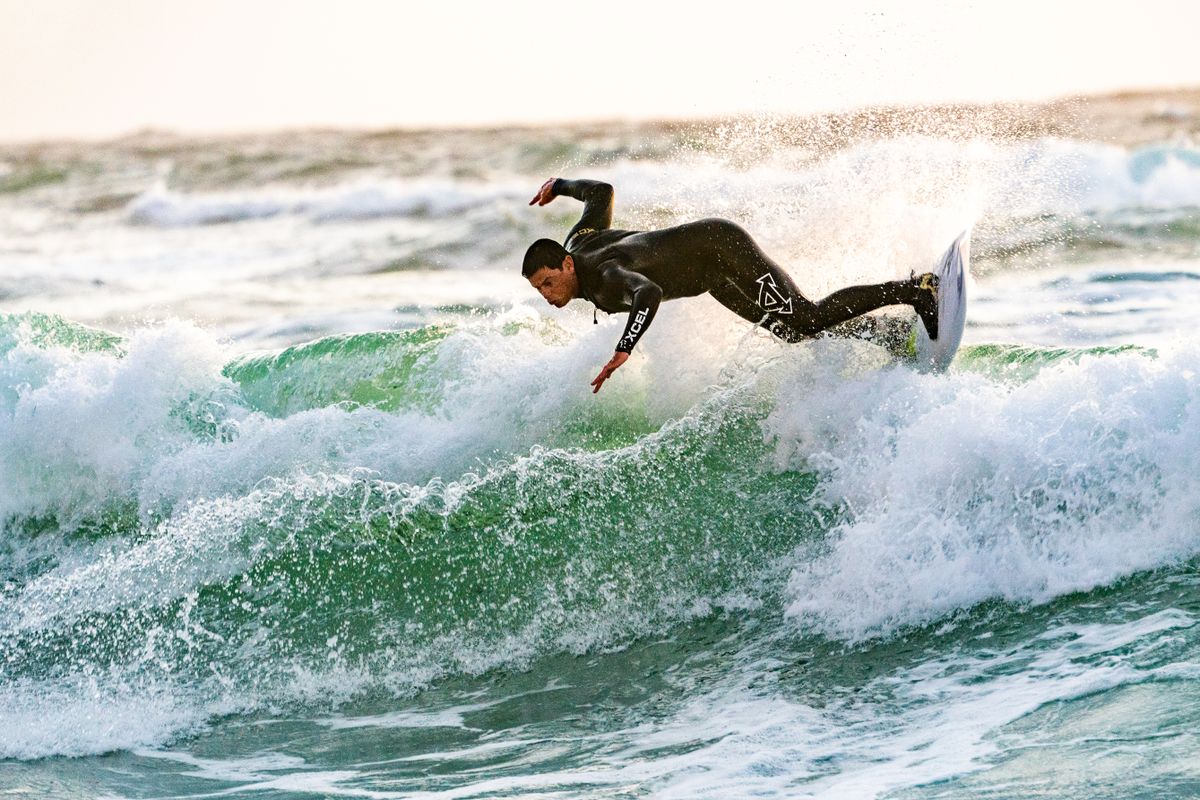
Portugal's Atlantic coast is one of the most consistent surf destinations in Europe — not just for advanced surfers chasing big-wave breaks, but for beginners, intermediate surfers, and families who want clean, safe, well-managed beaches. The Blue Flag certification adds a layer of quality assurance that matters: these are beaches where water quality is independently tested, safety equipment is maintained, and beach management is active.
Of Portugal's 398 Blue Flag certified beaches, 19 are specifically tagged as surf beaches in our dataset. This guide covers them by region, with honest notes on swell consistency, skill level suitability, and what the Blue Flag certification means in practice at each location.
The Silver Coast: Ericeira, Peniche, and Nazaré
The stretch of coastline between Lisbon and Porto — known informally as the Silver Coast — contains Portugal's most significant surf breaks and several of its Blue Flag beaches. This is where Portugal's surf identity was forged, and the Blue Flag programme has been expanding in this region as beach management has improved.
Ribeira de Ilhas near Ericeira is a World Surfing Reserve — one of only a handful worldwide. The beach holds Blue Flag status and is a genuinely world-class right-hand reef break that works best in autumn and winter swells. This is not a beginner beach. The powerful, hollow waves at Ribeira de Ilhas require intermediate-to-advanced skills. The Blue Flag certification here reflects exceptional environmental management of a sensitive reef ecosystem, not just water quality.
Praia Nova near Peniche is the more accessible companion beach to the famous Supertubos. Where Supertubos is a grinding beach break best left to experienced surfers, Praia Nova offers more forgiving conditions suitable for intermediate surfers — and it holds Blue Flag status consistently.
At surf beaches, the Blue Flag water quality requirement is particularly meaningful. Surf beaches receive a disproportionate amount of diffuse run-off from agricultural land and storm drains during heavy rain. The certification requires that bathing water meet Excellent or Good standards — and that results are posted publicly. Check the posted water quality results before surfing after heavy rain at any beach, Blue Flag or otherwise.
Algarve Surf Beaches: West Coast and South Coast Breaks
The Algarve is divided into two very different surf zones by Cape St Vincent. The south-facing Algarve coast has gentler, more consistent waves suitable for beginners. The west-facing Algarve coast (from Sagres northward) receives the full force of Atlantic swells and produces some of the best waves in southern Portugal.
Praia da Mareta in Sagres is a south-facing sheltered bay with consistent beginner conditions. It holds Blue Flag status and has two surf schools operating on the beach during the summer season. The combination of Blue Flag certified water and structured beginner instruction makes it an excellent starting point for first-time surfers.
Porto de Mós near Lagos is a broader beach break with varied conditions that suit different skill levels depending on swell direction. It's certified Blue Flag and consistently sees clean, manageable waves from October through April when Portuguese surf season peaks.
Praia de Salema in the Budens municipality is smaller and more sheltered but maintains Blue Flag status and provides gentle beach break conditions for progressing beginners — particularly in summer when the swell is smaller and more forgiving.
Central Portugal: Setúbal to Lisbon
The beaches south of Setúbal and on the Arrábida coast combine Blue Flag water quality with surf access — though the Arrábida Natural Park's protected status means conditions here are managed very carefully.
Albarquel near Setúbal is one of the quieter certified surf beaches in Portugal. It receives clean Atlantic swells refracted around the Tróia Peninsula and produces consistent beach break waves. Crowd levels are low year-round compared to the more famous breaks north and south.
Surf Season Calendar for Portugal Blue Flag Beaches
| Period | Conditions | Blue Flag active? | Best for |
|---|---|---|---|
| Oct–Mar | Large, powerful swells, 14°C water | Most sites: No | Advanced surf, low crowds |
| Apr–May | Consistent 1–2m, improving water 17°C | Yes (from May) | All levels, quiet beaches |
| Jun–Sep | Small 0.5–1m, 20°C+ water | Yes | Beginners, lessons, families |
For more on water quality certification at Portuguese surf beaches, the bathing water quality guide explains what the testing measures and how to interpret posted results. For Atlantic Spain's surf beaches (Galicia, Asturias, Basque Country), the companion article on Blue Flag surf beaches in Atlantic Spain covers 31 certified surf beaches across the northern Spanish coast.
Full details on all Portuguese certified beaches are in the Portugal Blue Flag beaches guide, including non-surf beaches with the best water quality scores.
Which Blue Flag beaches in Portugal are best for beginner surfers? +
Praia da Mareta in Sagres, Porto de Mós near Lagos, and Praia de Salema in the western Algarve are the best certified beaches for beginner surfers. All three offer sheltered or semi-sheltered beach breaks with consistent small waves, surf schools operating on-site in season, and Blue Flag water quality certification. For beginners in summer (when Atlantic swell is smaller), almost any Blue Flag beach break on the Algarve west coast will provide manageable conditions. Avoid the Silver Coast breaks (Ribeira de Ilhas, Supertubos area) until you have strong intermediate skills.
Is Nazaré a Blue Flag beach? +
Nazaré town beach holds Blue Flag certification. The famous big-wave break at Praia do Norte — where 30-metre waves attract tow-in surfers in winter — is separate from the main Blue Flag certified beach in the town bay. Praia do Norte is not a bathing beach and has no Blue Flag status. The certified town beach is a safe, family-oriented sandy beach that is completely separate from the big-wave area. If you're visiting Nazaré for the waves rather than the beach, note that the big-wave season runs October through March when the Blue Flag certification is not active on the main beach.
When is the best time to surf Blue Flag beaches in Portugal? +
October through March brings the most powerful and consistent surf to Portugal's Atlantic coast, with swells generated by North Atlantic storms producing waves of 1–4 metres on exposed beaches and up to 10+ metres at big-wave spots. However, the Blue Flag certification is not active at most beaches during this period. For the combination of Blue Flag certified water quality and good surfing conditions, April–May and September–October offer the best windows. Summer (June–August) provides safe, manageable conditions for beginners with Blue Flag protection, but experienced surfers will find the small swell unsatisfying.
Does Blue Flag certification make surf beaches safer? +
Blue Flag certification requires specific safety infrastructure — including lifeguard coverage during designated hours, rescue equipment maintained to a standard, and clear beach rules posted. At surf beaches, this translates to lifeguards trained in surf rescue (not just pool-lifeguard standard), clearly marked bathing zones separate from surfing zones, and emergency response protocols. The certification does not make the surf itself safer — wave height, currents, and reef hazards remain unchanged. But it does ensure that if something goes wrong, the rescue response infrastructure is in place and maintained to a verified standard.
How does Ericeira's World Surfing Reserve relate to Blue Flag? +
They are separate but complementary designations. Ericeira's World Surfing Reserve status (awarded by the Save the Waves Coalition) protects the surf ecosystem — the breaks, the coastal environment, and the surfing culture. Blue Flag certification at beaches within the reserve (including Ribeira de Ilhas) addresses water quality, facilities, and beach management. A beach can hold Blue Flag but not be a World Surfing Reserve, and vice versa. Where both apply, as at Ribeira de Ilhas, it indicates an exceptionally well-managed coastal environment. Blue Flag's annual certification requirement provides ongoing accountability that the reserve designation does not.
Browse all Blue Flag surf beaches
Our surf beach filter covers 170+ Blue Flag certified surf spots across Europe — searchable by country and coast type.
Browse surf beaches →