Miramar
Valencian Community, Spain: Excellent water quality
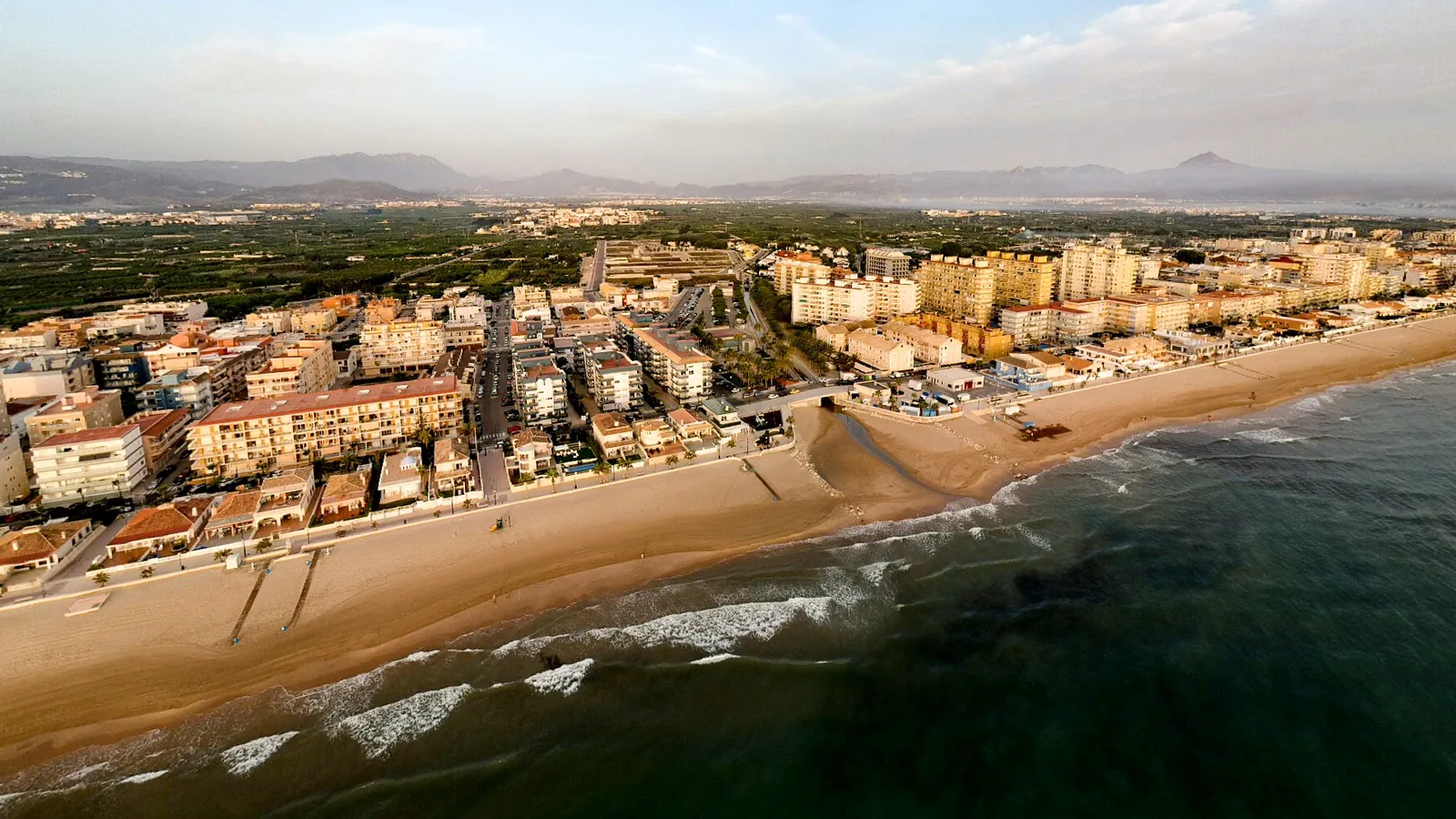
Miramar is a family-oriented urban beach in the Valencian Community, located 72 kilometres south of Valencia. The beach features fine golden sand and sits on a south-facing coastline with excellent bathing water quality. A seafront promenade runs along the beach, offering space to walk and…
Quick Overview
Plan Your Visit to Miramar
The key facts before you go
About the Beach
What is Miramar?
Miramar is a family-oriented urban beach in the Valencian Community, located 72 kilometres south of Valencia. The beach features fine golden sand and sits on a south-facing coastline with excellent bathing water quality. A seafront promenade runs along the beach, offering space to walk and relax, while the nearby town of Miramar provides accommodation and sports facilities.
Lifeguards patrol daily from 11:00 to 19:00 during summer months (July to September), with full lifesaving and first aid equipment on duty. The beach attracts visitors seeking accessible coastal access with reliable safety provisions and a developed infrastructure suitable for families spending a day by the sea.
It sits alongside Blue Flag beaches in Valencian Community, part of a broader network of Blue Flag certified beaches across Spain certified annually by the Foundation for Environmental Education.
Visitor Feedback
What Visitors Say About Miramar
What visitors appreciate
- family beach|family atmosphere|promenade|place to walk|clean sand|foot shower|golden sand|chalets|palm trees|playground for children
- Excellent EU-rated bathing water quality
Points to consider
- Can be busy during July and August peak season
- Facilities may be reduced outside peak months
Based on aggregated public visitor feedback. Themes are synthesised from multiple sources, not individual quotes. Zeach does not reproduce individual reviews.
Sunrise, Sunset & Beach Direction
Miramar faces south toward Balearic Sea. The best light for photography and swimming is typically in June. Direct sun hours follow that facing.
Planning
When to Go: Month by Month
| Month | Air Temp | Water Temp | Crowds |
|---|---|---|---|
| Jan | 12°C | 15°C | Low |
| Feb | 13°C | 14°C | Low |
| Mar | 14°C | 15°C | Low |
| Apr | 16°C | 16°C | Low |
| May | 20°C | 18°C | Low |
| Jun | 24°C | 22°C | Med |
| Jul | 27°C | 25°C | High |
| Aug | 27°C | 26°C | High |
| Sep | 24°C | 25°C | Med |
| Oct | 20°C | 22°C | Low |
| Nov | 16°C | 19°C | Low |
| Dec | 14°C | 16°C | Low |
When is the best time to visit Miramar?
The best time to visit Miramar is June. Air temperatures peak around 27°C in summer. Peak water temperature reaches 25°C in July.
How crowded does Miramar get?
Miramar attracts a family-focused crowd during the swimming season (June to September), particularly on weekends and Spanish holidays. The beach atmosphere reflects its family designation, children's activities, playground facilities, and shallow water entry encourage parents with young visitors. Peak times typically occur in July and August when water temperatures reach 25.0°C and school holidays take place.
The urban setting means the beach is busier than rural alternatives but more managed than untamed coastal areas. The promenade sees regular foot traffic from walkers rather than just swimmers. Outside July–September, visitor numbers decrease significantly as water temperatures drop below comfortable swimming conditions.
September maintains summer temperatures (around 21°C) while October becomes noticeably cooler. Winter months (November to April) see minimal bathing activity, though the promenade continues to attract local walkers. The cleanliness standards and presence of defined facilities create an orderly environment rather than a chaotic scene.
Is Miramar open year-round?
The beach itself is accessible year-round, though staffed facilities including lifeguards typically operate only during the official season (15-06 – 15-09). The Blue Flag is displayed during the certification period only.
The Water
Swimming and Beach Life at Miramar
Is Miramar safe to swim?
Miramar is Blue Flag certified, which requires meeting strict bathing water standards set by the EU Bathing Water Directive. Water quality is rated Excellent.
What is the water temperature at Miramar?
Peak water temperature at Miramar reaches around 25°C in July, making it comfortable for swimming during the summer months. In winter (January), air temperatures average 12.3°C.
What is the beach like at Miramar?
Miramar's defining feature is its expanse of fine, golden sand that slopes gently toward the water. The beach benefits from a south-facing aspect, which maximizes sunlight exposure throughout the day. The seafront promenade provides a walking route separate from the main beach area, allowing visitors to explore the coastline on foot while enjoying sea views.
Foot showers are positioned along the beach for rinsing off sand and salt water. The surrounding area includes palm trees that offer occasional shade, and a children's playground is available for younger visitors. The beach is classified as urban, meaning facilities and services are immediately accessible rather than requiring travel inland.
Water quality is consistently rated as excellent, monitored through official testing protocols. During peak season (July to September), lifeguards maintain a presence from 11:00 to 19:00 daily, reducing to a set timetable outside these dates. The sand maintains good cleanliness standards throughout the year, though conditions vary with seasonal weather patterns.
Accommodation options are available nearby, including chalets, allowing multi-day visits without commuting from distant cities. The combination of accessible facilities, reliable safety cover, and maintained infrastructure makes Miramar a functioning family beach rather than a secluded destination.
Miramar sits on the Balearic Sea: explore all Blue Flag beaches on the Mediterranean.
While You're Here
Beyond Miramar
Miramar sits within the Valencian coastal region, positioned between larger cities and resort towns. Valencia lies 72 kilometres north and offers cultural attractions, museums, and the City of Arts and Sciences complex. Gandia, accessible via the N-332 road, is a nearby coastal town with additional beaches and amenities.
The VP-1062 and VP-1061 routes connect to broader road networks allowing exploration of the wider Costa region. Local facilities within Miramar include sports installations available for beach visitors. The town of Miramar itself provides shops, restaurants, and services supporting beach visits.
The south-facing aspect means the surrounding landscape follows typical Mediterranean coastal patterns with palm trees and developed seafront infrastructure. Official information about Miramar is available through the town's website (www.ajumiramar.org), which lists accommodation options, events, and seasonal services.
Transport
Getting to Miramar
How do I get to Miramar by car?
Miramar is approximately 1.82 km from Miramar. Follow local road signs to the beach. Check Google Maps or a local map for the most current directions.
What is the nearest airport to Miramar?
The nearest airport is Valencia Airport (VLC), approximately 66.8 km away.
Can I get to Miramar by public transport?
Public transport options vary by season. Check local transport authority websites for current bus and train schedules connecting to Miramar. The nearest recorded bus stop is 368 m from the beach.
Is there a train to Miramar?
Miramar lists Platja i Grau de Gandia as the nearest railway station, 5.11 km away. Check current timetables before travelling.
Map
Find Miramar
Open the map or get directions to the Miramar pin. Amenity names are listed here only when OpenStreetMap has a mapped feature nearby.
Map loads when you ask. Tiles stay off the first paint.
Map: OpenStreetMap (ODbL)
On the beach
Facilities at Miramar
- Lifeguards
- Yes, during the certified season
- Wheelchair access
- Accessible site facilities and water entry
- Visual assistance
- No
- Toilets
- No
- Showers
- No
- Drinking water
- Yes
- Parking
- Available nearby (surface parking). 119 m away
- Surface
- Golden sand
- Entry
- Free to enter
These details can change. Check on arrival.
Map data © OpenStreetMap contributors
Practical Details
Practical Information
| At the Beach | |
| Official Season | 15 Jun – 15 Sep |
|---|---|
| Beach Type | Sandy beach |
| Nearest supermarket | 100 m from the beach |
| Nearest bus stop | 368 m from the beach |
| Visiting Information | |
| GPS Coordinates | 38.9567°N, 0.1220°W |
| Water Quality | Excellent (EU Bathing Water Directive) |
| Blue Flag Operator | Foundation for Environmental Education (FEE), Spain |
Frequently Asked Questions
Miramar FAQ
Is Miramar worth visiting?
Miramar is worth visiting if you seek a family-friendly beach with reliable facilities and excellent water quality. The fine golden sand, lifeguard presence during summer, and developed promenade make it a functional choice for coastal days. It suits visitors prioritizing safety and amenities over remote exploration.
Water temperatures reach 25.0°C in July–August, making swimming comfortable during these months. Outside the June–September season, water temperatures drop significantly, limiting bathing appeal. The beach's urban character means it attracts families and regular visitors rather than those seeking isolation.
How do I get to Miramar?
By car: Exit A-7 at La Oliva, follow N-332 south toward Gandia, then use VP-1062 and VP-1061 to reach Miramar. Miramar is located 72 kilometres south of Valencia.
Public transport options exist but require multiple transfers. The town website (www.ajumiramar.org) provides additional travel information and directions.
What is the best time of year to visit Miramar?
June to September is the designated swimming season, with July and August offering peak conditions. Water temperatures in these months range from 21°C (June, September) to 25.0°C (July, August). Air temperatures during summer average 27°C.
The beach operates full lifeguard services (11:00–19:00) from July 1st to September 12th. May reaches 18.4°C water temperature, borderline for swimming. October drops to 22.1°C.
Outside June–September, water becomes too cold for comfortable bathing. Weekend and school holiday periods see higher visitor numbers.
What facilities are there at Miramar?
Miramar provides foot showers for rinsing salt water and sand. A children's playground serves families with young visitors. Sports installations operate in the area.
A seafront promenade runs along the beach for walking. Nearby accommodation includes chalets. The beach maintains clean sand standards.
Lifeguards are present daily (11:00–19:00) during summer, with full lifesaving and first aid equipment on duty July 1st–September 12th. The urban setting means shops, restaurants, and services are accessible nearby. Palm trees provide occasional shade.
Is Miramar suitable for families?
Yes, Miramar is explicitly classified as a family beach. Facilities include a children's playground, shallow water entry via fine sand, foot showers, and a promenade safe for walking. Lifeguards ensure safety during peak season (July 1st–September 12th, 11:00–19:00 daily).
Excellent water quality and calm conditions make it appropriate for younger swimmers. Nearby accommodation options, including chalets, support multi-day family visits.
The beach atmosphere reflects family use with regular facilities and services. Air temperatures peak at 27°C in summer, suitable for children's comfort.
Editorial
From the Zeach Blog
Everything you need to know about what makes a beach qualify for Blue Flag status, from water quality to environmental education.
Read moreOur editorial team's pick of the standout Blue Flag beaches in Spain, rated for family friendliness, scenery, and facilities.
What the flag actually means, how certification works, and why a Blue Flag is a genuinely reliable signal, not just a marketing tool.
Read moreSources
- Foundation for Environmental Education: Blue Flag programme
- FEE site listing for Miramar
- ADEAC (Asociación de Educación Ambiental y del Consumidor)
- European Environment Agency: bathing water quality
Last verified September 2026. National operator pages and FEE listings are the primary certification sources.